


New Book Releases page has various space books on astronomy and space from spacecraft, space flight, history, missions and more. Use the right navigation under categories to find a specific book section.
Please buy here to support the site.
 Apollo 8: The Thrilling Story of the First Mission to the Moon (Hardcover) by Jeffrey Kluger (May 2017)
Apollo 8 was first flight to the moon. Three astronauts were sent to lunar orbit. The mission has many firsts: first view of the far side of the moon, first earth-rise and the first re-entry through the earth’s atmosphere following a flight to deep space.
From Amazon.com, Amazon.co.uk, Amazon.ca
 Spy Satellite Manual (Hardcover) by David Baker (December 2016)
The book is a useful reference guide to US spy satellites, their capabilities and how they work. Includes Manned Orbiting Laboratory (MOL), America’s planned military space station.
An insight into the technology and engineering of military intelligence gathering spacecraft.
From Amazon.com, Amazon.co.uk

Spaceships: An Illustrated History of the Real and the Imagined Hardcover by Ron Miller (October 2016)
The book takes readers on a visual journey through the history of the spaceship both in our collective imagination and in reality. The vivid illustrations trace the spaceship through its conception, engineering, and building, from the practical origins of spaceflight in the wartime V-2 rocket to future Mars programs.
From Amazon.com,
 British Secret Projects: Britain’s Space Shuttle [Hardcover] by Daniel Sharp (September 2016)
Author the story of how, from 1963 to 1966, English Electric/BAC’s Preston works secretly led the world in re-useable spacecraft design.
A huge variety of designs formed the P.42 project with more than 100 proposals for hypersonic interceptors, bombers, reconnaissance aircraft, satellite launchers, spacecraft launchers, orbital spy planes and satellite killers. The end result was the ‘Multi-Unit Space Transport And Recovery Device’ (MUSTARD), which pre-dated the USA’s Space Shuttle program by six years.
From Amazon.com, Amazon.co.uk
 NASA Saturn V 1967-1973 (Apollo 4 to Apollo 17 & Skylab) (Owners’ Workshop Manual) by David Woods (August 2016)
Manual tells the story of the Saturn V. It explains how each of the rocket’s three stages worked. From the decision to build the famous rocket to the operation of its rocket engines’ valves and pumps, this lavishly illustrated and deeply informative book offers a deeper appreciation of the superb Saturn V.
From Amazon.com
 Freedom 7: The Historic Flight of Alan B. Shepard Freedom 7: The Historic Flight of Alan B. Shepard, Jr. [Paperback] by Colin Burgess (Author) (November 2013)
The book tells the Freedom 7 story with anecdotal details and tales never before revealed in print. Alan Shepard’s history-making mission aboard Freedom 7 provided America’s first tentative step into space that would one day see its Apollo astronauts, including Alan Shepard walk on the Moon. Although beaten into space just three weeks earlier by the Soviet cosmonaut Yuri Gagarin.
Buy fro Amazon.com,
 NASA Mars Rovers Manual: 1997-2013 (Sojourner, Spirit, Opportunity and Curiosity) (Owners’ Workshop Manual) [Hardcover]
  by David Baker (Author) (May 2013)
This manual covers the development, design, hardware and engineering of three generations of Mars rover: Sojourner, Spirit and Opportunity and Curiosity. Learn how these machines work as well as what they have found and hope to discover and look forward to the possibility that humans may yet set foot on the Red Planet.
Buy from: Amazon.com, Amazon,co.uk, Amazon.ca, eCampus.com
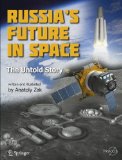 Russia’s Future in Space: The Untold Story [Paperback] by Anatoly Zak (Release Date: 29 March 2013)
Read about Russia’s vision for its future of space exploration. Topics covered for the Russian space program ambitious goals include: construction of a permanent lunar base, a Mars expedition, missions to asteroids and the moons of Jupiter. Also covers Russia”s current effort to develop the next-generation manned spacecraft, its launch vehicle and the new launch site.
Amazon.com, Amazon.co.uk, Amazon.ca
 Hubble’s Universe: Greatest Discoveries and Latest Images by [Hardcover] Terence Dickinson (September 2012)
Find magnificent pictures, many of which have yet to receive wide distribution as news stories or in publications outside scientific papers and presents a breathtaking portfolio drawn from an archive of over 500,000 existing Hubble images.
Amazon.com, Amazon.co.uk, Amazon.ca, Walmart.com
 Space Atlas: Mapping the Universe and Beyond [Hardcover] by James Trefil (Author), Buzz Aldrin (Foreword) (November 2012)
National Geographic Space Atlas takes you on a tour of the universe. Three ever widening domains are presented : planets, stars and the large scale universe itself. The tour starts close to home with our own solar system, from the sun scorched rocks of Mercury to the icy vastness of the Kuiper Belt beyond Pluto.
Amazon.com, Amazon.co.uk, Amazon.ca, Walmart.com
 Comets and How to Observe Them (Astronomers’ Observing Guides) by Richard Schmude Jr. (September 2010)
Many practical examples of how to construct comet light-curves, measure how fast a comet’s coma expands and determine the rotation period of the nucleus. Examples are illustrated with drawings and photographs. Also read about key observing techniques that can be used with commercially available modern observing equipment from basic observations to more scientific measurements.
Amazon.com, Amazon.co.uk, Amazon.ca, BettterWorldBooks.com, ebooks.com
 (SLS): America’s Next Manned Rocket for NASA Deep Space Exploration to the Moon, Asteroids, Mars – Rocket Plans, Ground Facilities, Tests, Saturn V Comparisons, Configurations by World Spaceflight News & NASA. [Kindle Edition] (April 2012)
Guide to the Space Launch System (SLS), NASA’s next manned rocket for deep space exploration. Coverage includes: vehicle configurations, RS-25D and J-2X rocket engines, Solid Rocket Motor (SRM) ground systems development and operations program including the Crawler-Transporter and Mobile Launcher, exploration test flight previews; affordability implementation; NASA 90-day report to Congress on the SLS and Orion Multi-purpose Crew Vehicle; the Michoud Assembly Facility and the Advanced Booster program.
Amazon.com,
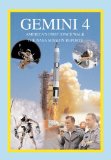 Gemini 4: America’s First Space Walk: The NASA Mission Reports by Steve Whitfield (Editor) (March 2011)
From the official files of NASA, this book gives the complete account of the first American spacewalk, which took place on June 3, 1965. Filled with information on the mission’s crew, engineers, and equipment, the guide explores the research and fears involved with creating a thin suit that would hold up in the dangerous vacuum of space. For space fans and engineers, a companion DVD is included that features spectacular photographs and documents from the NASA archives.
Amazon.com, Amazon.co.uk, Amazon.ca,
 The Partnership: A NASA History of the Apollo-Soyuz Test Project by Edward Clinton Ezell (Author), Linda Neuman Ezell (Author), Paul Dickson (Introduction) (January 2011)
The 1975 Apollo-Soyuz Test Project (ASTP) was the first joint U.S.-Soviet space flight, in which teams from the two nations met in orbit to test an international docking system and conduct both collaborative and independent studies. This authorized NASA history features many interviews with participants and firsthand observations of ASTP activities. It includes 86 pages of photos and a full-color insert.
Amazon.com, Amazon.co.uk, Amazon.ca, eCampus.com
 The Human Archaeology of Space: Lunar, Planetary and Interstellar Relics of Exploration by P.J. Capelotti (July 2010)
A catalog of archaeological artifacts that have been left behind in space as a result of human exploration, this work describes the remnants of lost satellites, discarded lunar rovers, depleted rockets, and various abandoned spacecraft. The book is divided into three parts covering distinct but interconnected issues of lunar, planetary, and interstellar archaeology. In Parts I and II, individual chapters cover each space mission and provide technical notes, and, in some cases, images of the artifacts. Part III explores the archaeology of mobile artifacts in the solar system and the wider galaxy, looking particularly at the problems encountered in attempting a traditional archaeological field survey of artifacts that may remain in motion indefinitely.
Amazon.com, Amazon.co.uk, Amazon.ca
 Prepare for Launch: The Astronaut Training Process (Paperback) by Erik Seedhouse (Author) (April 2010)
Today’s astronauts require many different abilities. They must not only be expert in performing flight simulations but must also be proficient in such dissimilar subjects as photography, thermodynamics, electrical repairs, flight procedures, oceanography, public affairs, and geology. In Prepare for Launch, the author introduces the technologies and myriad activities that constitute or affect astronaut training, such as the part-task trainers, emergency procedures, the fixed-based and motion-based simulators, virtual environment training, and the demands of training in the Weightless Environment Training Facility.
Amazon.com, Amazon.co.uk, Amazon.ca
Emerging Space Powers: The New Space Programs of Asia, the Middle East and South-America (Paperback) by Brian Harvey (Author), Henk H. F. Smid (Author), Theo Pirard (Author) (March 2010)
This work introduces the important emerging space powers of the world. Many of their space programs are little known, but they all play vital roles. Some have quite ambitious goals and are even challenging the leaders in the space community.
Amazon.com, Amazon.co.uk, Amazon.com
Space Conquest: The Complete History of Manned Spaceflight by Francis Dreer (July 2009)
The greatest-ever feat of science and technology in the history of mankind occurred when the USA’s Apollo 11 landed men on the surface of the moon. The great ideological struggle of the Cold War between the USA and the Soviet Union was defined by the space race – a race won by the Americans. This stunningly illustrated story of manned spaceflight covers the Soviet and American space programmes, Neil Armstrong’s historic ‘one small step for man’ in July 1969, and continues into the era of space stations and reusable spacecraft like the Shuttle.
Amazon.com, Amazon.co.uk, Amazon.ca
The New Space Race: China vs. USA (Paperback) by Erik Seedhouse (December 2009)
The world’s most populous nation views space as an asset, not only from a technological and commercial perspective, but also from a political and militaristic one. The repercussions of this ideology already extend far beyond Washington. China vs. United States offers a glimpse of future Chinese aspirations in space and the politico-militaristic implications of a looming space race, and explains why an interplanetary spaceship called the Tsien Hsue Shen might one day travel to the outer planets.
Amazon.com, Amazon.co.uk, Amazon.ca
Rocket Pioneers Picture
To a Distant Day: The Rocket Pioneers by Chris Gainor (April 2008)
Chris Gainor’s irresistible narrative introduces us to pioneers such as Konstantin Tsiolkovsky, Robert Goddard, and Hermann Oberth, who pointed the way to the cosmos and created the earliest wave of international enthusiasm for space exploration. It shows us German engineer Wernher von Braun creating the V-2, the first large rocket, which opened the door to space but failed utterly as the “wonder weapon” it was meant to be. From there Gainor follows the space race to the Soviet Union and the United States and gives us a close look at the competitive hysteria that led to Sputnik, satellites, space probes and finally human flight into space in 1961.
Amazon.com, Amazon.co.uk,

An Introduction to Space Weather by Mark B. Moldwin (Author) (February 2008)
Space weather is a field of space science focused on understanding societal and technological impacts of the solar-terrestrial relationship. The book uses practical aspects of space weather to introduce space physics and give students an understanding of the Sun-Earth relationship. Ideal for introductory space physics courses.
Amazon.com, Amazon.co.uk, Amazon.ca
America In Space: NASA’s First Fifty Years by Steven Dick (Author), Neil Armstrong (Foreward), Robert Jacobs (Author), Constance Moore (Author), Bertram Ulrich (Author) (October 2007)
The story of America’s space age is told with more than 400 carefully selected images. The story begins in the 1950s with intrepid test pilots venturing ever faster and higher, and opens out into the now-legendary Mercury and Apollo missions of the 1960s that made astronauts into national heroes. The space shuttle era shows us what everyday space travel might look like, while grand vistas of the universe expand our sense of wonder. The large format of the book captures both the human drama and the vast scale of NASA’s projects.
Amazon.com, Amazon.co.uk, Amazon.ca, Shop.com, Walmart.com,
Doctor Who: Starships And Spacestations Picture
Doctor Who Books – novels
Astronaut Love Triangle Case Book
Out There: The In-Depth Story of the Astronaut Love Triangle Case that Shocked America (Mass Market Paperback) by Diane Fanning (Author) (October 2007)
Lisa Nowak was dedicated, smart, and courageous, one of the first astronauts to fly a space shuttle mission after the horrific 2003 Columbia disaster. But that was before a fit of pure, primal jealousy landed her in an airport parking lot in Florida, where Lisa had a fateful, near-fatal confrontation with the woman believed to be her romantic rival. In this captivating account, master crime journalist Diane Fanning goes straight to the heart of the case. Through interviews with key family members, friends, and colleagues, the author reveals for the first time the real story behind the headlines and casts a light on Lisa’s groundbreaking fall from grace.
Amazon.com, Amazon.co.uk,
Cape Canaveral, Cocoa Beach & Florida’s Space Coast: Great Destinations: A Complete Guide by Dianne Marcum (January 2008)
Just 35 miles east of Orlando, this 72 mile stretch of Florida coastline is home to the Kennedy Space Center Visitor Complex, Port Canaveral, and the U.S. Astronaut Hall of Fame, no to mention wide stretches of sandy beaches and unspoiled nature preserves. This guide is part of the Great Destinations series and has information to help you plan the perfect getaway.
Amazon.com, Amazon.co.uk, Amazon.ca, Walmart.com,
Space Biology
Biology in Space and Life on Earth: Effects of Spaceflight on Biological Systems by Enno Brinckmann (October 2007)
Read about the effects of spaceflight on biological systems includes issues at the forefront of life sciences research, such as gravitational biology, immune system response, bone cell formation and the effects of radiation on biosystems. Edited by a leading specialist at the European Space Agency with contributions by internationally renowned experts, the chapters are based on the latest space laboratory experiments, including those on SPACELAB, ISS, parabolic flights and unmanned research satellites. An indispensable source for biologists, medical researchers and astronautics experts alike.
Amazon.com, Amazon.co.uk, Walmart.com,
Rocketeers: How a Visionary Band of Business Leaders, Engineers, and Pilots Is Boldly Privatizing Space by Michael Belfiore (August 2007)
In the more than 40 years since the first human left the atmosphere of Earth, no one had ever done so without the help of a government agency. That changed on June 21, 2004, when SpaceShipOne, built by aircraft designer Burt Rutan, entered space and ushered in the commercial space age.
Investment capital began to pour into the new commercial spaceflight industry. Richard Branson’s Virgin Galactic will begin ferrying space tourists out of the atmosphere in 2009. Las Vegas hotelier Robert Bigelow is spending $500 million of his personal fortune to develop the world’s first commercial space station (i.e., space hotel). Former PayPal CEO Elon Musk is developing orbital spacecraft to service Bigelow’s space station. Others want to tap the vast natural resources of space, including unlimited solar power. These space entrepreneurs, including Microsoft cofounder Paul Allen and Amazon.com founder Jeff Bezos, now see space as the Next Big Thing.
Amazon.com, Amazon.co.uk, Amazon.ca
Wonderful World of Space Book Picture
Ages 9-12
Wonderful World of Space (Disney Learning) (Hardcover) by Andrew Fraknoi (Author) (July 2007)
Packed with stunning photographs and the latest information about space, Disney Learning: Wonderful World of Space engages young readers, explains science in everyday language, and was created to appeal to the natural curiosity in all children. Author, teacher, and former Executive Director of the Astronomical Society of the Pacific Andrew Fraknoi answers questions such as “How fast are you moving when you are sitting still?”, or “Do wolves howl when it’s a full moon?” and even “Where does space begin?”. This good-humored tour of the worlds beyond Earth includes activities, star maps, and “All Star” cards, a glossary of words, and a section, “Famous Stars”, based on some of the best known stars in the sky, and more.
Amazon.com, Amazon.co.uk, Amazon.ca
Roswell Witness Pic
Witness to Roswell: Unmasking the 60-Year Cover-Up
by Thomas J. Carey (Author), Donald R. Schmitt (June 2007)
Read actual eyewitness testimony to the recovery of a UFO in 1947 just outside of Roswell, New Mexico. Witnesses will not only reveal that the alien crew were placed in body bags and packed in dry ice, but most astonishing of all, that one of them survived the crash. You will be shocked to learn that: the Air Force used death threats against civilian eyewitness and their children to silence them, the Air Force turned a small New Mexico town upside down and inside out…in search of a weather balloon?
Amazon.com, Amazon.co.uk, Shop.com, Walmart.com,
space book picture
Too Far From Home: A Story of Life and Death in Space by Chris Jones (March 2007)
In the nearly forty years since Neil Armstrong walked on the moon, space travel has come to be seen as a routine enterprise—at least until the shuttle Columbia disintegrated like the Challenger before it, reminding us, once again, that the dangers are all too real. Too Far from Home vividly captures the hazardous realities of space travel.
Amazon.com, Amazon.co.uk, Amazon.ca, Shop.com, Walmart.com
After Sputnik: 50 Years of the Space Age by Martin Collins (March 2007)
Presented by the National Air and Space Museum, offers a unique perspective on the remarkable changes brought by spaceflight. The curatorial experts of the Museum have selected and present artifacts—from icons such as John Glenn’s Mercury spacesuit to lesser-known travelers like Anita the spider, flown on Skylab in the 1970s—that take readers inside the far-reaching effort to explore and use space.
Amazon.com, Amazon.co.uk, Amazon.ca, Shop.com,
A History of the Kennedy Space Center by Kenneth Lipartito, Orville R. Butler (June 2007)
Comprehensive history of the Kennedy Space Center, NASA’s famous launch facility located at Cape Canaveral, Florida. Though the famous Vehicle Assembly Building and launch pads dominate the flat Florida landscape at Cape Canaveral and attract 1.5 million people each year to its visitor complex, few members of the public are privy to what goes on there beyond the final outcome of the flaring rocket as it lifts into space. With unprecedented access to a wide variety of sources, including the KSC archives, other NASA centers, the National Archives, and individual and group interviews and collections, Lipartito and Butler explore how the methods and technology for preparing, testing and launching spacecraft have evolved over the last 45 years. Their story includes the Mercury and Gemini missions, the Apollo lunar program, the Space Shuttle, scientific missions and robotic spacecraft, and the International Space Station, as well as the tragic accidents of Challenger and Columbia. Throughout, the authors reveal the unique culture of the people who work at KSC and make Kennedy distinct from other parts of NASA.
Amazon.com, Amazon.co.uk, Amazon.ca
Scale Spacecraft Modelling (Paperback) by Matt Irvine (Author) by Matt Irvine (Author) (January 2007)
Covers scratch building and adaptation, the techniques needed to make those pristine models really dirty to match the ones you see in the movies and the design and construction of realist dioramas and settings. The books includes detailed step-by-step guides to: the basic tool box; glues and cements; spacecraft from scratch; assembling that bits and pieces box; To Mars – with cocoa! make your own decals; fact meets Science Fiction; vac-forming parts; building multi-material kits; miniature photography.
Amazon.com, Amazon.co.uk
Solar System Book
Encyclopedia of the Solar System, Second Edition (Hardcover) by Lucy-Ann McFadden (Editor), Paul Weissman (Editor), Terrence Johnson (Editor) (December 2006)
Completely revised and updated reference guide to our solar system, including studies of the Sun, the Earth and the other major planets, the Moon and other natural satellites, planetary rings, comets, asteroids, meteorites, and interplanetary dust. It features new entries on topics such as the oceans on Mars, Quaoar and the discovery of Sedna.
Amazon.com, Amazon.co.uk,
Other Space and Astronomy Books
Apollo 11 Manual: An Insight into the Hardware from the First Manned Mission to Land on the Moon (Hardcover) by Chris Riley (Author), Phil Dolling (Author) (May 2009)
From Amazon.com, Amazon.co.uk, Amazon.ca
Cassini at Saturn- Huygens Results by David H Levy
From Amazon.com, Amazon.co.uk, (February 2007)
Interstellar Spaceflight and Communications: Exploiting the Sun as a Gravitational Lens by Claudio Maccone (October 2007)
From Amazon.com, Amazon.co.uk
Energiya-Buran: The Soviet Space Shuttle by Bart Hendrickx, Bert Vis (October 2007)
From Amazon.com, Amazon.co.uk, Amazon.ca, Walmart.com
To be added:
Integrating Women into the Astronaut Corps: Politics and Logistics at NASA, 1972-2004
Space Probes: 50 Years of Exploration from Luna 1 to New Horizons [Hardcover]
Selecting the Mercury Seven: The Search for America’s First Astronauts (Springer Praxis Books / Space Exploration) [Paperback]
Robotic Exploration of the Solar System, Part 3: The Modern Era 1997-2009 (Springer Praxis Books / Space Exploration) [Paperback]
Living and Working in Space: A NASA History of Skylab [Paperback]
What Do We Know About the Solar System? (Freestyle Express: Earth, Space, and Beyond) [Library Binding]
Soviet Robots in the Solar System: Mission Technologies and Discoveries
Any suggestions or comments on AeroSpaceGuide’s Space Book – New Book Releases Page, click on Contact Info.
Thank You for visiting the Space Shop!


You must be logged in to post a comment.